Western Astrological Symbolism
Analytical Psychology recognizes the value of these images as expressions of deep psychic processes. Rather than reducing symbolic languages to mere beliefs or causal explanations, it understands them as forms capable of revealing the underlying dynamics of human experience and of supporting impulses toward transformation.
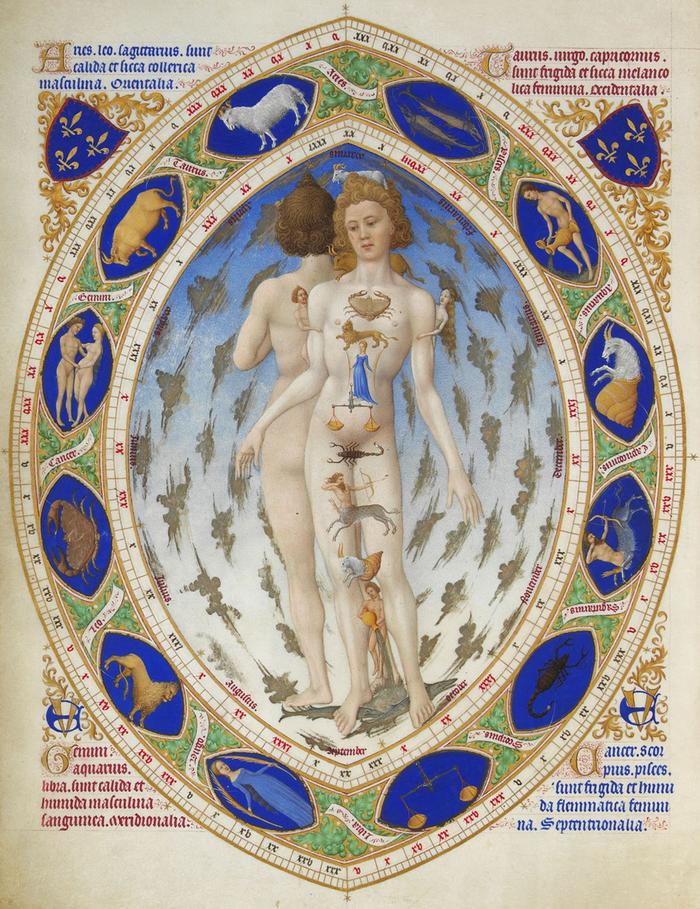
Among these systems, Western astrology stands out as one of the richest and most intricate symbolic traditions. Seen this way, it isn't a tool for prediction or a deterministic model, but a language that offers images for illuminating aspects of one's own psychological experience.
Astrology invites us to think about time differently than we're used to—not only as something measurable, but as a qualitative reality, carrying meaning of its own. From this angle, it seeks to understand the symbolic significance of particular configurations and the human experiences to which they may correspond. In Jungian terms, this kind of relationship can be understood through the concept of synchronicity, which C. G. Jung defined as a meaningful coincidence between an inner psychic state and an external event, with no causal link between the two.
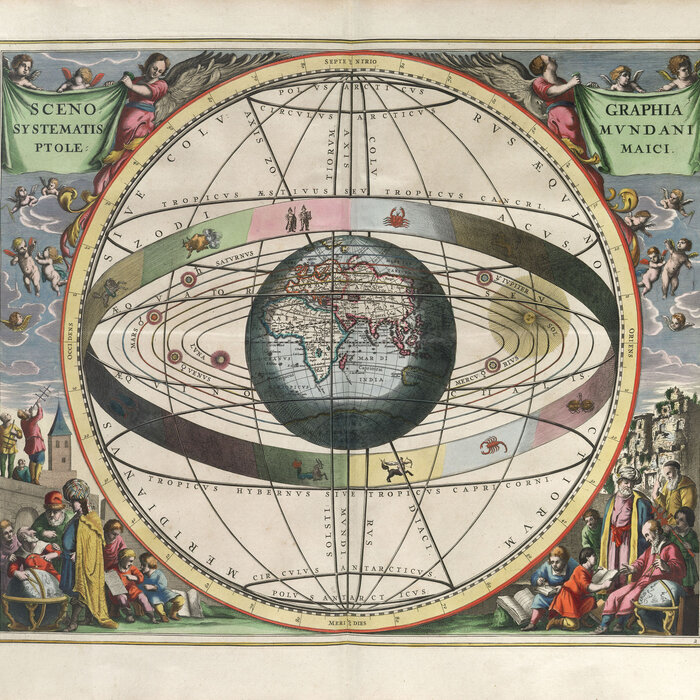
The natal chart is a symbolic map built from the exact date, time, and place of birth. Through precise astronomical calculations, it renders an arrangement of the sky at that instant and organizes it into a meaningful whole. Like any map, it doesn't describe the territory itself, but offers a way of orienting within it.
Brought into clinical work, it can become a valuable path toward exploration and self-knowledge. The chart can act as a mirror for inner movements that haven't yet found conscious expression. It represents a configuration of potentials, tensions, and possibilities for growth—one whose expression will always be singular to each person. These symbols make it possible to deepen self-understanding and open new, more creative ways of working through and expressing what's found there.
